 brushless motor
Axial Flux Motor Power Density: Achieving the Right Balance with Thermal Stability
Axial Flux Motor Power Density: Achieving the Right Balance with Thermal Stability
As electric mobility grows, motor design becomes more critical. Among advanced solutions, axial flux motors stand out. They offer high torque density and compact size. However, higher axial flux motor power density often brings thermal challenges.
Therefore, balancing power density and thermal stability is key to long-term performance.
This page explains how axial flux motors achieve high output while maintaining safe and stable operation.
What Is an Axial Flux Motor?
An axial flux motor works with magnetic flux parallel to the shaft. This differs from radial motors, where flux moves outward.
Because of this structure:
-
The magnetic path is shorter
-
Torque density is higher
-
The motor length is smaller
-
Weight is reduced
As a result, axial flux motors are ideal for:
-
Electric vehicles (EVs)

axial flux motor high power density internal layout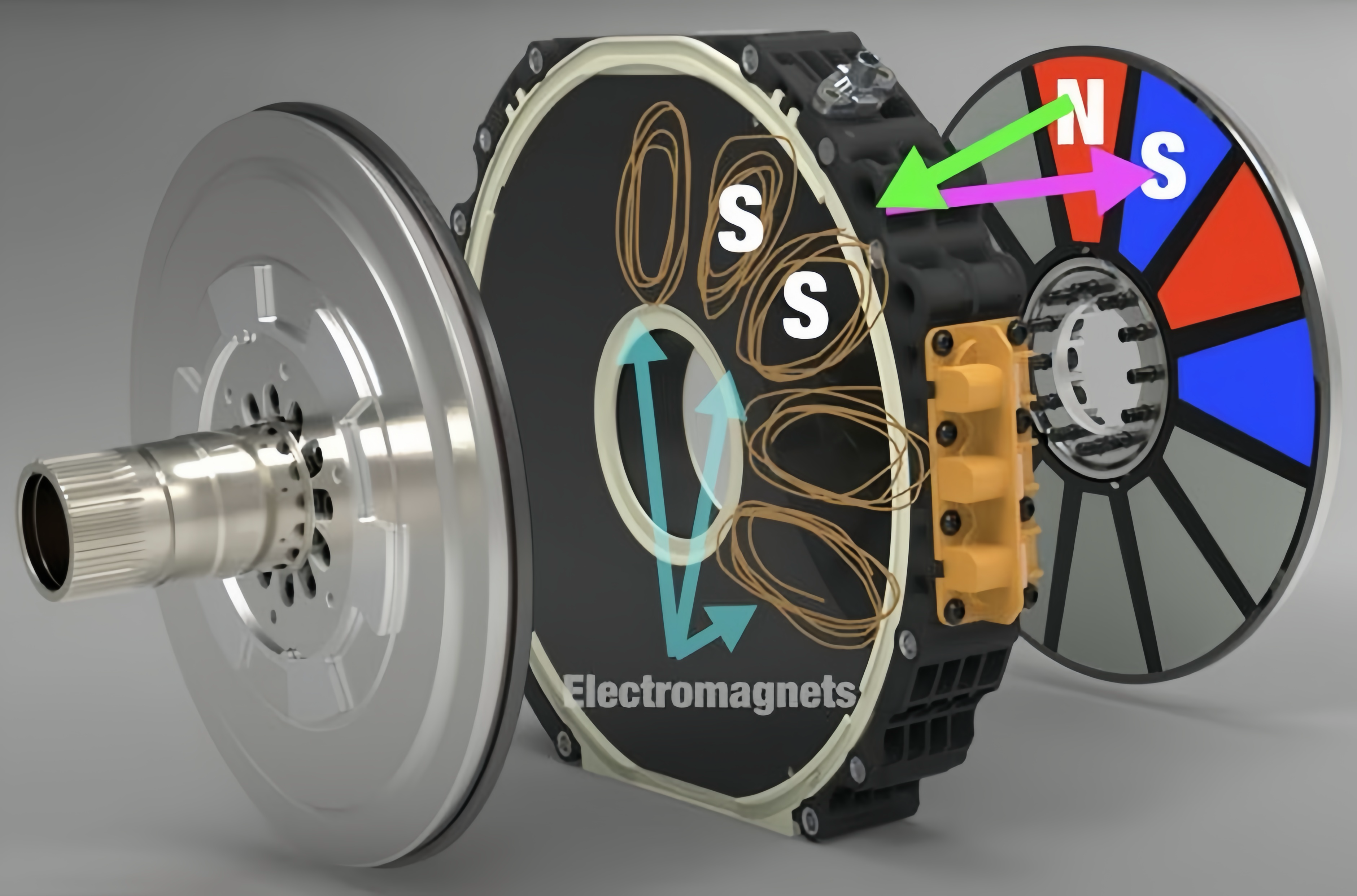
-
eVTOL aircraft
-
Compact industrial drive systems
However, higher power in a smaller volume means higher heat concentration.
Understanding Axial Flux Motor Power Density
Power density measures how much power a motor delivers per unit weight or volume. It is often expressed in W/kg or kW/L.
Higher axial flux motor power density means:
-
More torque in less space
-
Better acceleration in EV systems
-
Lighter drivetrain structures
-
Improved system integration flexibility
For automotive and aerospace industries, this is a major advantage.
Yet, as power density increases, so does heat generation.
Why Thermal Stability Matters
Thermal stability defines how well a motor maintains performance under high temperature.
During operation, heat comes from:
-
Copper loss (I²R loss)
-
Core loss
-
Eddy current loss
-
Mechanical friction
If heat is not controlled:
-
Magnet strength may drop
-
Insulation may degrade
-
Efficiency may decrease
-
Service life may shorten
Therefore, thermal control is not optional. It is essential.
The Trade-Off Between Power Density and Heat
In axial flux design, power density and heat are directly related.
How to Increase Axial Flux Motor Power Density
Engineers often improve power density by:
-
Using stronger permanent magnets
-
Increasing current density
-
Optimizing magnetic circuit layout
-
Reducing air gap
-
Increasing winding fill factor
While these methods boost torque output, they also raise internal temperature.
Therefore, thermal design must evolve at the same time.
Strategies to Improve Thermal Stability
To maintain safe operation under high load, several methods are used.
1. Advanced Cooling Systems
Modern axial flux motors use:
-
Liquid cooling channels
-
Direct oil cooling
-
High conductivity aluminum housings
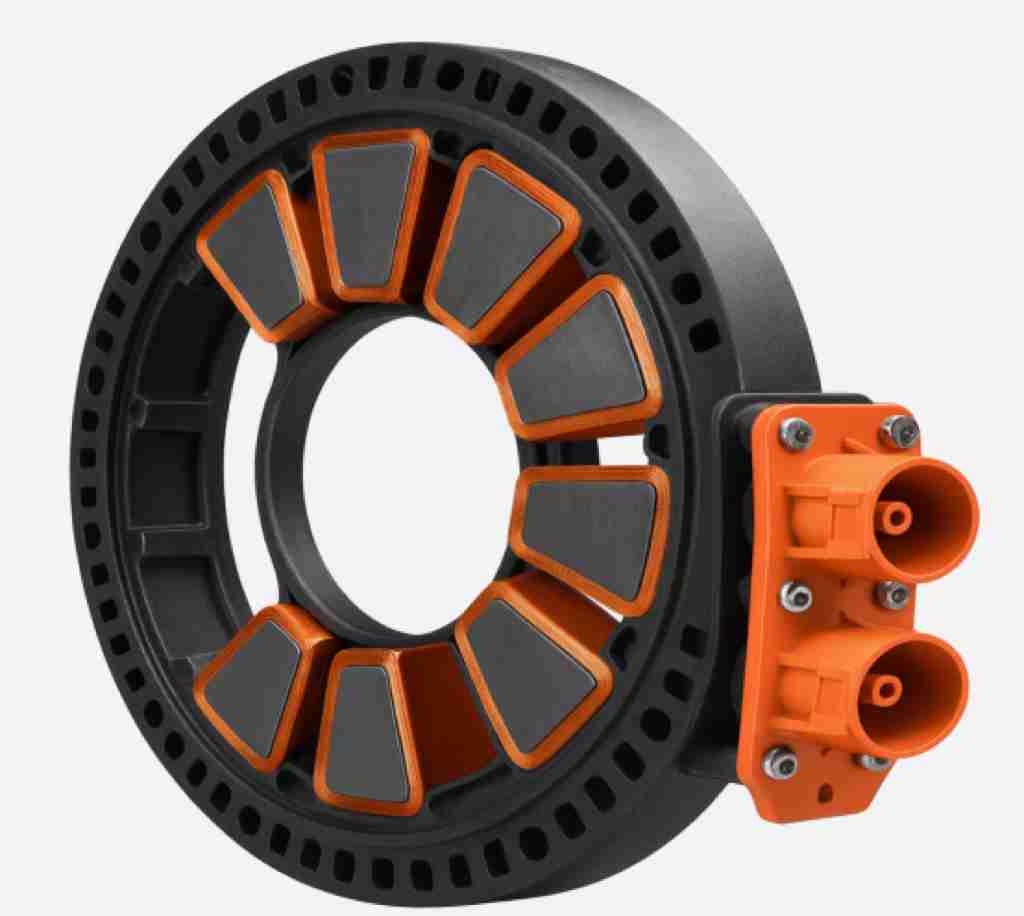 axial flux motor stator rotor power density structure
-
Enhanced airflow paths
Liquid cooling is especially effective in high-power EV platforms.
2. High-Temperature Materials
Thermal-resistant components improve reliability:
-
High-grade NdFeB magnets
-
Class H or higher insulation
-
Low-loss silicon steel laminations
-
High purity copper windings
Material selection directly impacts both efficiency and lifespan.
3. Intelligent Thermal Monitoring
For EU and North American B2B markets, advanced control systems are expected.
Temperature sensors integrated into the stator and windings allow:
-
Real-time monitoring
-
Automatic power adjustment
-
Overheat protection
This improves system safety and compliance.
Engineering Balance: Design Integration Approach
The most effective solution is not maximizing one factor alone. Instead, leading manufacturers use integrated design:
-
Multi-physics simulation (electromagnetic + thermal)
-
Finite element analysis (FEA)
-
Thermal flow modeling
-
Magnetic optimization software
This ensures axial flux motor power density increases without sacrificing stability.
Application-Specific Optimization
Different industries require different balance levels.
Electric Vehicles
EV systems need high torque and stable temperature during acceleration. Liquid cooling and optimized stator core design are common.
Aerospace and eVTOL
Weight reduction is critical. Therefore, advanced composite materials and efficient cooling layouts are used.
Industrial Automation
Continuous operation requires strong thermal endurance. Here, steady-state heat control is the priority.
Future Trends in Axial Flux Motor Development
As electrification expands, axial flux motors will continue to evolve.
Future directions include:
-
AI-based motor control optimization
-
New high-temperature composite materials
-
Carbon-reduced manufacturing processes
-
Higher efficiency magnetic materials
The goal is clear: increase axial flux motor power density while maintaining thermal stability.
Why This Balance Matters for OEMs
For B2B customers in Europe and North America, motor performance must meet:
-
Efficiency standards
-
Safety regulations
-
Long lifecycle requirements
-
Sustainable manufacturing expectations
A well-balanced axial flux motor ensures:
-
High torque density
-
Stable thermal performance
-
Longer service life
-
Lower maintenance cost
-
Reliable integration into modern EV platforms
Conclusion
Axial flux motors provide outstanding power density. However, without proper thermal management, performance gains may not be sustainable.
Therefore, the true innovation lies in balancing axial flux motor power density with thermal stability.
Through advanced cooling design, smart materials, and intelligent control systems, modern axial flux motors achieve this balance. As technology continues to improve, these motors will play an even greater role in the electrified future.