 brushless motor
Motor Stator Structure: Types, Winding Design, and Industrial Applications
Motor Stator Structure: Types, Winding Design, and Industrial Applications
Introduction: Why the Motor Electric motor Stator Is Important
Electric motor stator are used in almost every industry today. They drive machines, vehicles, pumps, and automation systems. However, motor performance depends heavily on one key part — the motor stator.
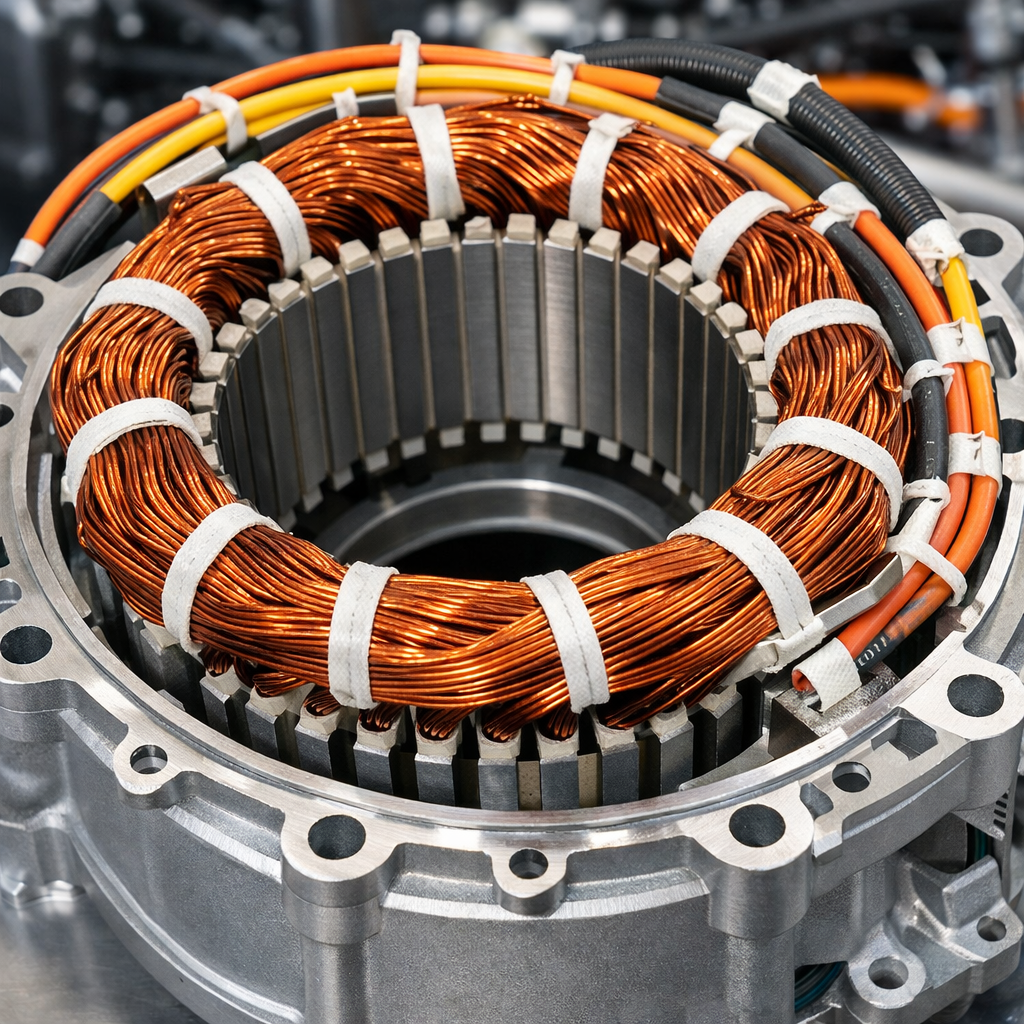
EV motor stator Image
The stator stays fixed during operation. However, it plays an active role. It creates the rotating magnetic field needed for energy conversion. Without this magnetic field, the rotor cannot move.
Therefore, stator design directly affects motor efficiency and life.
Moreover, modern industries now demand:
-
higher efficiency
-
lower energy loss
-
stable operation
-
longer service life
As a result, stator technology has become a major focus for global motor manufacturers.
Basic Structure of a Electric Motor Stator
A motor stator normally includes three main parts. Each part performs a different task. Together, they ensure stable motor operation.
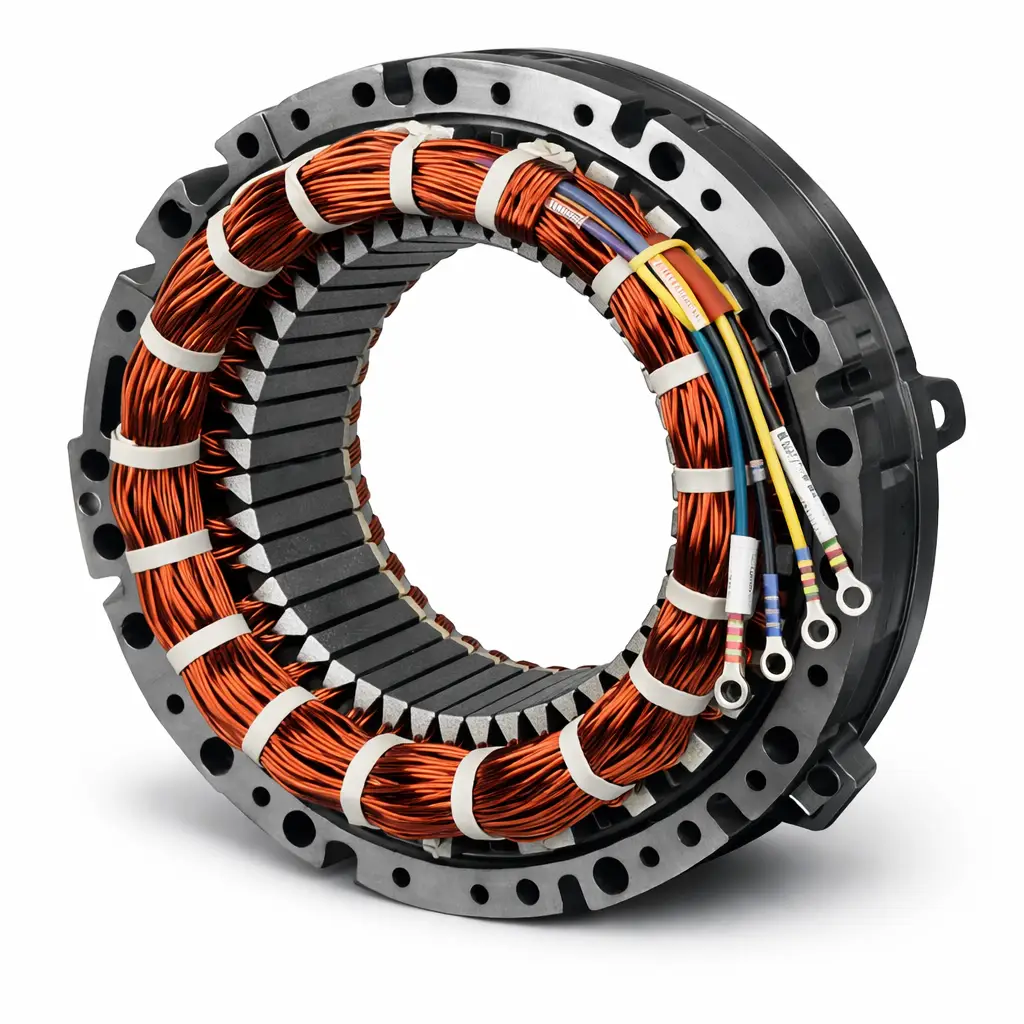
generator stator design
1. Electric motor Stator Core
First, the stator core forms the magnetic path of the motor.
It is usually made from thin electrical steel laminations. These laminations reduce energy loss. At the same time, they improve magnetic performance.
Because eddy current loss decreases, motor efficiency increases.
In addition, thin laminations help reduce vibration and heat buildup.
2. Stator Windings
Next, stator windings carry electric current.
When current flows through the winding, a rotating magnetic field forms. Then, this magnetic field cuts the rotor conductors.
As a result, torque or electric current is generated.
Therefore, winding design strongly influences:
-
torque output
-
efficiency
-
starting ability
-
temperature rise
For this reason, winding layout is a key step in motor engineering.
3. Motor Frame
Finally, the frame supports and protects the stator.
It also helps remove heat during operation. Meanwhile, it keeps internal components aligned.
Because of improved cooling performance, motor reliability increases.
Motor Manufacturing Distribution in China
Today, China plays an important role in global motor production.
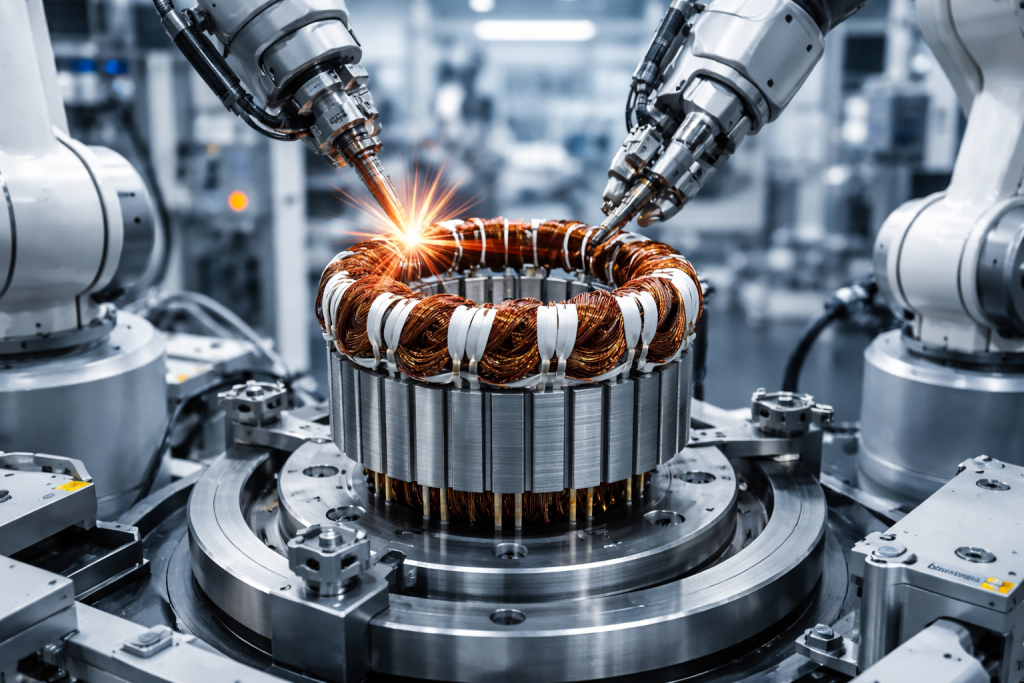
automation motor stator
Most motor component suppliers are located along:
-
the southeast coastal region
-
the Yangtze River Delta
These areas offer mature supply chains. In addition, they provide strong stamping and automation capability.
Therefore, many EU and North American OEM manufacturers source stator cores from these regions.
Electric Motor Stator Structure Classification
Motor stators can be classified in several ways. Each method helps engineers choose the correct design.
I. Classification by Magnetic Pole Formation
Based on pole formation, stator windings fall into two types:
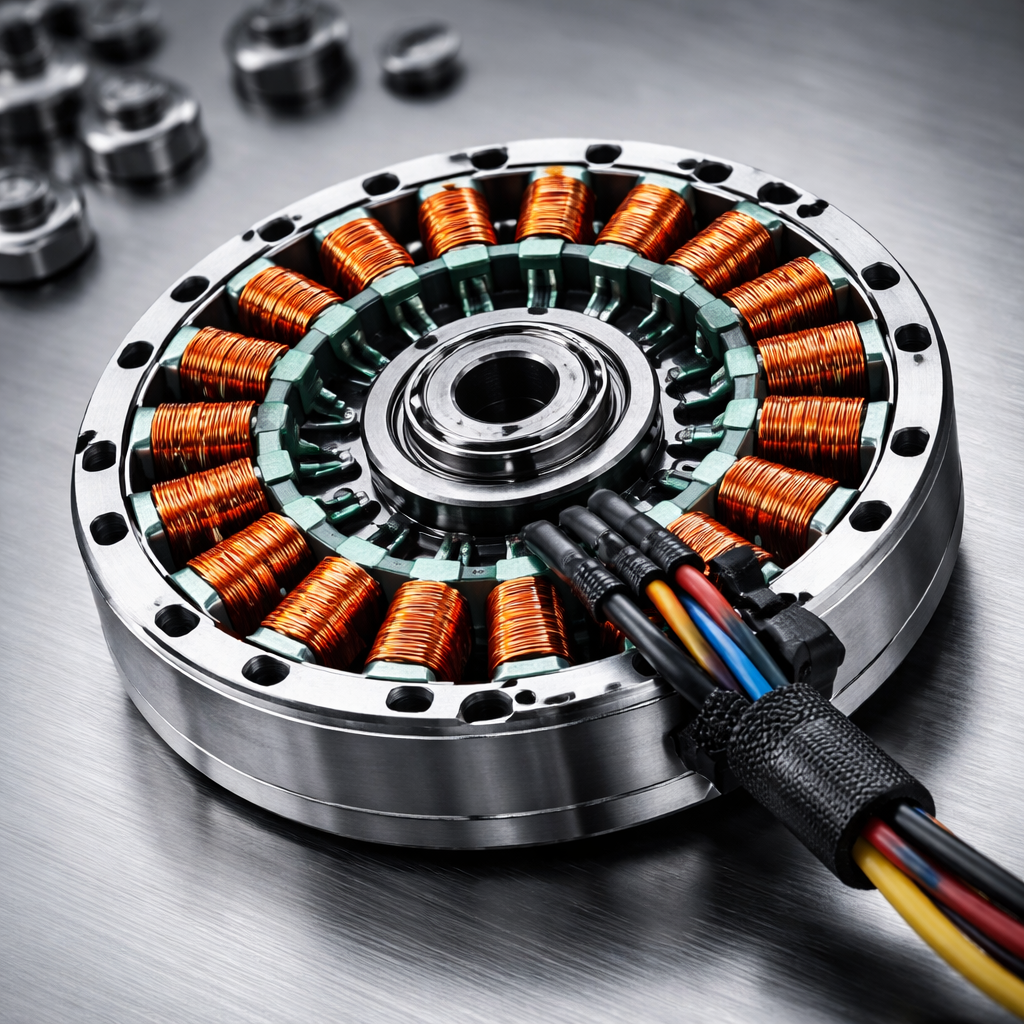
robotics motor stator
-
salient pole winding
-
non-salient pole winding
1. Salient Pole Electric motor stator Winding
In a salient pole winding, each coil group forms one magnetic pole.
Therefore, the number of coils equals the number of poles.
To maintain alternating N and S poles, adjacent coils carry opposite current directions. Consequently, coils must connect in reverse series.
Because magnetic poles are clearly defined, magnetic strength becomes concentrated.
As a result, this structure produces high starting torque.
Typical Uses
For example, salient pole windings are used in:
-
synchronous generators
-
low-speed motors
-
excitation systems
2. Non-Salient Pole Winding
In contrast, non-salient pole windings distribute magnetic poles across several slots.
Here, one coil group forms two poles. Therefore, fewer coil groups are required.
All coils carry current in the same direction. Meanwhile, coils connect sequentially.
Because the magnetic field becomes smoother, vibration decreases.
Consequently, operating stability improves.
Common Applications
This design is widely used in:
-
industrial AC motors
-
high-speed drives
-
automation systems
II. Classification by Winding Shape and Embedding Method
Stator windings can also be classified by coil shape and slot arrangement.
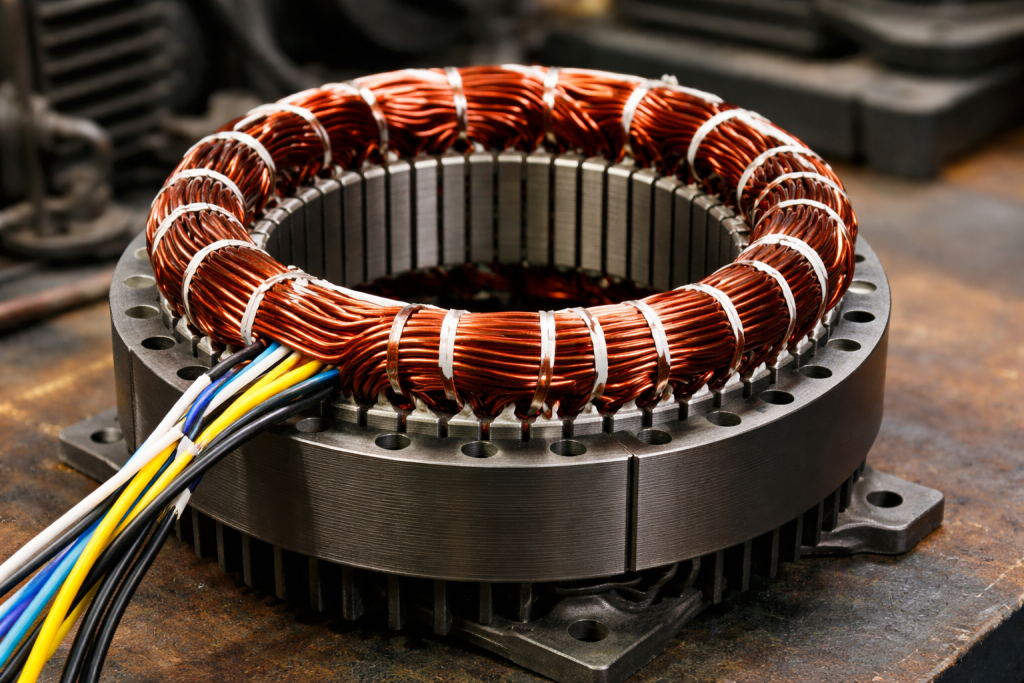
HVAC motor stator
Generally, two main types exist:
-
concentrated winding
-
distributed winding
1. Concentrated Electric motor stator Winding
In concentrated windings, coils gather around one pole area.
After winding, coils are shaped using insulation tape. Then, they are varnish-impregnated and dried.
Finally, they are inserted into the stator core.
Because end windings are short, copper loss decreases.
Moreover, manufacturing remains simple.
Applications
Therefore, concentrated windings are common in:
-
DC motors
-
shaded pole motors
-
general-purpose machines
2. Distributed Winding
Unlike concentrated designs, distributed windings spread coils across many slots.
As a result, magnetic distribution becomes more uniform.
Therefore, motors run more smoothly.
In addition, noise and vibration decrease.
Because of these advantages, distributed windings dominate modern motor design.
Concentric Electric motor stator Winding
Concentric windings use coils of different sizes sharing the same center.
These coils form a U-shaped layout.
They may be single-layer or multi-layer.
Consequently, manufacturing cost stays relatively low.
This structure is often used in single-phase motors and small three-phase motors.
Lap-Type Electric motor stator Winding
Meanwhile, lap windings use coils with identical shapes.
Each slot contains one or two coil sides.
Because coils overlap evenly, electromagnetic balance improves.
Lap windings include:
-
single-layer type
-
double-layer type
In double-layer designs, upper and lower coils share one slot.
Therefore, slot utilization increases.
As a result, efficiency improves.
Lap windings are widely used in three-phase asynchronous motors.
Stator Classification by Manufacturing Process
Manufacturing method also affects stator quality.
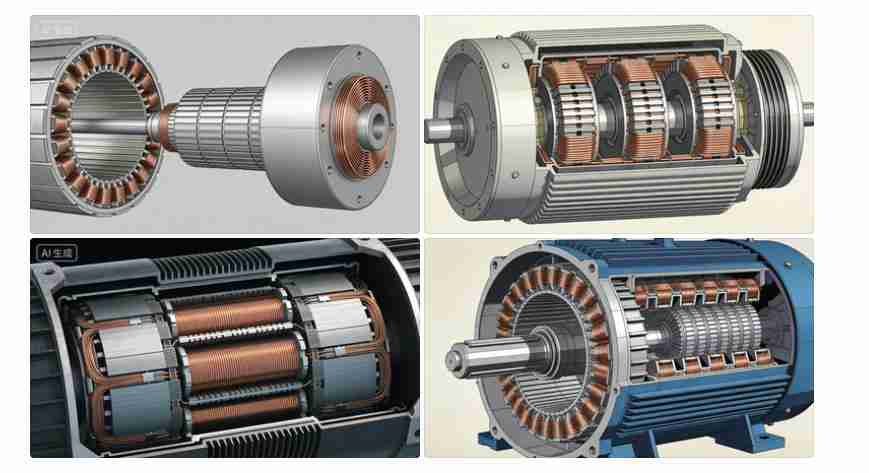
renewable energy generator stator
Wound Stator
First, wound stators insert coils after core assembly.
This method allows flexible design. Moreover, repair becomes easier.
However, automation efficiency is lower.
Three-Piece Stator
Next, three-piece stators divide the core into segments.
Because coils can be inserted before assembly, automation improves.
Consequently, production speed increases.
Solid-Piece Stator
Finally, solid-piece stators form a unified structure.
Therefore, mechanical strength improves.
In addition, vibration resistance becomes higher.
These stators suit high-power industrial motors.
Classification by Motor Operation Type
Synchronous Electric motor stator
In synchronous motors, rotor speed matches magnetic field speed.
Therefore, speed control becomes precise.
As a result, efficiency remains high.
Asynchronous Electric motor stator
Meanwhile, asynchronous motors operate with speed slip.
Because construction is simple, maintenance costs remain low.
Therefore, they dominate industrial applications worldwide.
Key Design Factors in Modern Stators
Magnetic Optimization
Engineers optimize magnetic paths to reduce flux loss.
As a result, torque density increases.
Thermal Management Electric motor stator
Heat is the main cause of motor failure.
Therefore, modern stators use improved insulation and cooling paths.
Consequently, service life extends.
Noise Reduction Electric motor stator
Distributed windings and precision laminations reduce vibration.
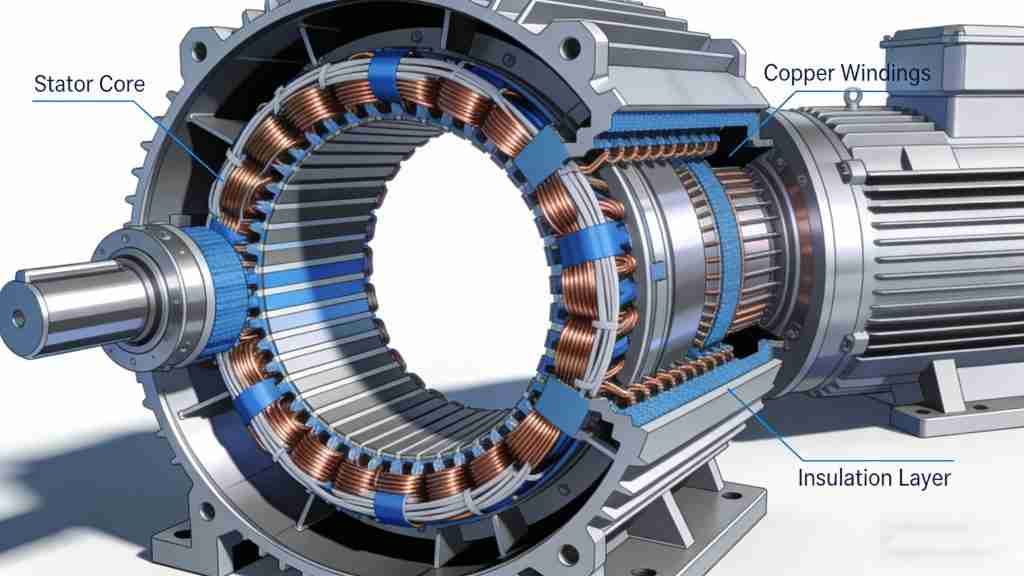
high efficiency industrial motor stator
As a result, motors operate quietly.
This is especially important for EV and robotics systems.
Industrial Applications
Motor stators support many industries.
For example:
-
electric vehicles
-
robotics
-
renewable energy
-
HVAC systems
-
industrial automation
Because electrification continues worldwide, demand keeps growing.
Conclusion Electric motor stator
In summary, the stator defines motor performance.
Although it does not rotate, it controls magnetic behavior.
Therefore, proper stator design improves efficiency, stability, and lifespan.
Moreover, advanced manufacturing now allows higher power density and better thermal control.
As industries move toward energy efficiency, stator innovation will remain essential.