 brushless motor
EV Axial Flux Motor Design: Engineering Challenges and Practical Solutions for Next-Generation Electric Vehicles
EV Axial Flux Motor Design: Engineering Challenges and Practical Solutions for Next-Generation Electric Vehicles
The rapid growth of electric vehicles is changing drivetrain engineering worldwide. As OEMs push for higher efficiency, lower weight, and more compact systems, EV axial flux motor design has become a key focus area.
Axial flux motors offer higher torque density and shorter magnetic paths than traditional radial motors. Because of this structure, they can deliver strong performance in a smaller package. However, designing an axial flux motor for electric vehicle applications is not simple. It requires advanced material selection, careful thermal management, precise magnetic optimization, and high-accuracy manufacturing.
This page explains the major engineering challenges in EV axial flux motor design. At the same time, it outlines practical solutions suitable for EU and North American EV platforms.
Why EV Axial Flux Motor Design Is Gaining Attention
In a radial motor, magnetic flux moves outward from the shaft. In contrast, in an axial flux motor, magnetic flux flows parallel to the shaft. This change in geometry creates several benefits:
-
Higher torque density
-
Shorter motor length
-
Improved efficiency

EV axial flux motor with high torque density design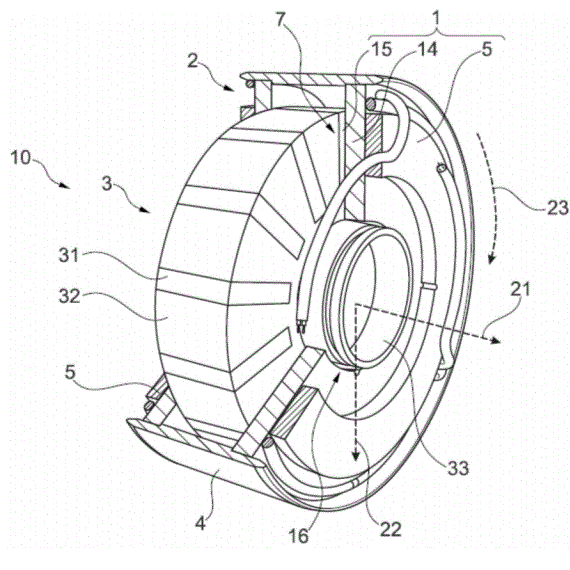
-
Better packaging flexibility
Because of these advantages, axial flux motors are now used in:
-
High-performance electric cars
-
Hybrid sports platforms
-
eVTOL propulsion systems
-
In-wheel motor applications
Still, greater power density also increases engineering complexity.
1. Material Selection in EV Axial Flux Motor Design
Material choice directly affects efficiency, reliability, and cost.
Permanent Magnet Challenges
Most EV axial flux motors use high-grade NdFeB magnets. These magnets produce strong magnetic force in small volume. Therefore, they support high torque density motor performance.
However, two main risks exist:
-
Price volatility of rare earth materials
-
Magnetic strength loss at high temperature
To reduce these risks, engineers must:
-
Select proper magnet grade
-
Apply corrosion protection coatings
-
Design thermal safety margins
In some cases, alternative magnet materials or hybrid magnet structures are explored.
Stator Core Material Optimization
The axial flux stator core plays a critical role. Because magnetic flux density is high, low core loss silicon steel laminations are required.
Important parameters include:
| Parameter | Typical Value | Design Impact |
|---|---|---|
| Lamination thickness | 0.2–0.35 mm | Lower eddy current loss |
| Core loss @1.5T | <3.0 W/kg | Higher system efficiency |
| Stacking factor | >95% | Strong torque output |
| Insulation class | High grade | Reduced short circuit risk |
Thin laminations reduce energy loss. Proper coating prevents interlayer current flow. Therefore, stator core precision strongly influences final EV motor efficiency.
2. Thermal Management in EV Axial Flux Motor Design
Heat control is one of the most critical challenges in axial flux motor for electric vehicle systems.
Because the motor is compact and disc-shaped, heat may concentrate near the windings and magnets. If heat is not controlled:
-
Torque drops
-
Efficiency decreases
-
Magnet life shortens
-
Insulation ages faster
Passive Cooling Methods
Passive solutions include:
-
Aluminum housing with high thermal conductivity
-
Increased surface area
-
Optimized air flow
Although passive cooling reduces complexity, it may not be enough for high-power EV applications.
Active Cooling Systems
Therefore, many designs integrate:
-
Liquid cooling jackets
-
Oil spray cooling
-
Direct stator cooling channels
Liquid cooling improves temperature stability significantly. However, it increases cost and integration effort. As a result, modern EV axial flux motor design often combines passive and active strategies.
3. Magnetic Circuit Optimization
Magnetic circuit design directly determines torque density and efficiency.
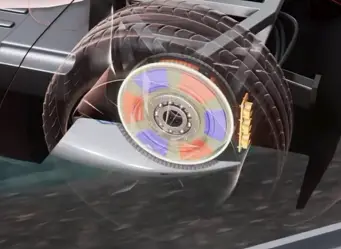
EV axial flux motor with high torque density design for electric vehicle drive system
Compared with radial motors, axial flux machines have:
-
Shorter magnetic paths
-
Higher flux concentration
-
More complex three-dimensional fields
Because of this complexity, engineers rely on finite element analysis (FEA) tools.
Key Magnetic Design Objectives
-
Reduce leakage flux
-
Lower eddy current loss
-
Optimize air gap uniformity
-
Minimize torque ripple
Magnet arrangement also matters. Surface-mounted magnets reduce mass. Interior magnets improve structural strength. Meanwhile, stator slot design affects both performance and noise.
Therefore, magnetic optimization is a central part of EV axial flux motor design.
Axial Flux vs Radial Flux Motor Comparison
| Feature | Axial Flux Motor | Radial Flux Motor |
|---|---|---|
| Torque Density | Very High | Moderate |
| Power Density | High | Medium |
| Motor Length | Short | Longer |
| Cooling Complexity | Higher | Lower |
| Manufacturing Maturity | Developing | Mature |
| Typical EV Use | Performance / Compact | Standard Platforms |
This comparison shows that axial flux motors provide superior torque density. However, they require higher design and manufacturing precision.
4. Manufacturing Complexity and Precision Control
Manufacturing is often the most demanding stage in EV axial flux motor design.
Axial structures require:
-
Strict air gap control
-
High flatness tolerance
-
Accurate magnet alignment
-
Balanced rotor assembly
Small deviations may reduce efficiency or increase vibration.
Stator Core Manufacturing Considerations
-
Burr height must be tightly controlled
-
Lamination stacking must remain flat
-
Bonding or welding must maintain uniform thickness
High-precision stamping and automated stacking systems improve consistency. In addition, inline inspection ensures dimensional stability.
For EU and North American OEM supply chains, compliance with ISO and IATF standards is often mandatory.
5. System Integration in Electric Vehicles
EV axial flux motor design must align with the entire vehicle system.
Integration involves:
-
Inverter compatibility
-
Battery management coordination
-
Thermal loop connection
-
Vehicle control communication
Because axial motors respond quickly, control algorithms must manage torque smoothly.
Modern systems use:
-
Field-Oriented Control (FOC)
-
High-frequency inverters
-
Advanced sensors
Proper integration improves range, acceleration, and system safety.
6. Sustainability and Lifecycle Engineering
Sustainability is now a core design factor in EU and North American markets.
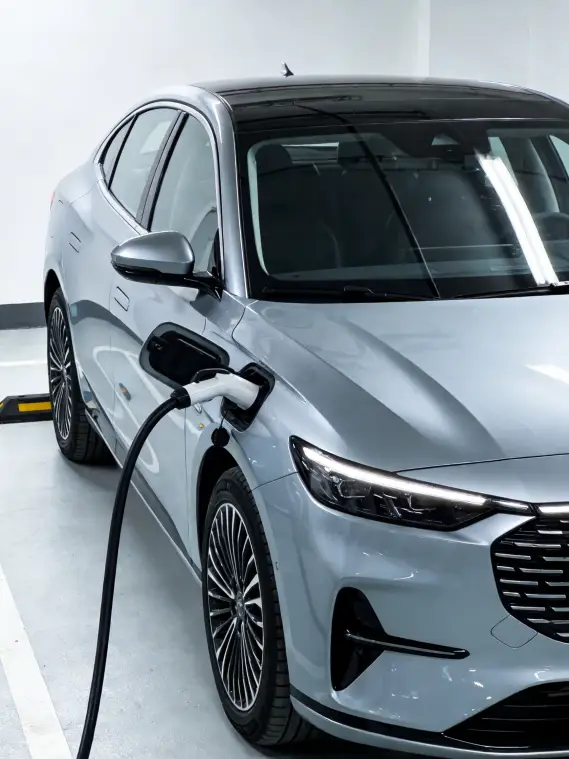
EV axial flux motor integrated in electric vehicle drivetrain
EV axial flux motor design must consider:
-
Rare earth material usage
-
Recyclability
-
Energy consumption during manufacturing
-
Carbon footprint reduction
Modular motor design helps extend product life. Additionally, improved manufacturing efficiency reduces environmental impact.
Therefore, sustainability is no longer optional. It is part of competitive EV motor engineering.
Practical Solutions for EV Axial Flux Motor Design
To overcome key challenges, leading manufacturers apply:
-
Multi-physics simulation during early design
-
Integrated thermal and magnetic modeling
-
High-grade silicon steel stator core optimization
-
Automated precision manufacturing
-
Liquid cooling integration for high-power systems
-
Modular architecture for easier service
These strategies improve reliability and long-term stability.
Applications
EV axial flux motors are suitable for:
-
High-performance electric vehicles
-
Dual-motor AWD systems
-
Compact EV platforms
-
Distributed drive systems
-
eMobility performance upgrades
Because of high torque density, these motors support lightweight drivetrain development.
Conclusion: The Future of EV Axial Flux Motor Design
EV axial flux motor design offers clear advantages:
-
Higher torque density
-
Compact packaging
-
Improved efficiency
-
Better power-to-weight ratio
However, it also introduces engineering challenges in materials, thermal control, magnetic design, manufacturing precision, and system integration.
As electric vehicle technology continues to evolve, axial flux architecture will likely play a larger role. With improved stator core materials, better cooling systems, and advanced simulation tools, next-generation axial flux motors will deliver higher performance and greater reliability.
For EV developers targeting high efficiency and compact drive systems, mastering EV axial flux motor design is a strategic step toward long-term competitiveness.